S12, Chapter 4: The Machine

 Apple Podcasts

 Spotify

 iHeartRadio

 PocketCasts

 Castbox

 Overcast

 Podcast Addict

 Amazon Music

 Castro

 Podchaser

 RSS Feed
A check for $1,000 and on the memo line... Toy Give Away.Another one for $3,000... Toy Drive. Both made out to the chief of police. Two days before Christmas.
...
In a final effort to rid us from what I consider to be frankly evil gamlbing ads, I have decided to remove all ads from season 12.
If you'd like to support the show you can do so on Patreon or PayPal.
https://www.patreon.com/tapesfromthedarkside/
https://www.tapesfromthedarkside.com/paypal
I'll keep you updated as I continue to lobby Spreaker / Vox Media for a common sense option to disable gamlbing ads without paying their exorbitant (borderline extortionate) monthly fee.
Patreon
https://www.patreon.com/tapesfromthedarkside
Merch
https://merchfromthedarkside.com/
Leave us a Review (...it really helps!)
https://www.tapesfromthedarkside.com/rate/
Paypal / Venmo Donations
https://www.tapesfromthedarkside.com/paypal/
0:05 It's getting dark outside. Tapes from the Dark Side contains descriptions of violence and sexuality. Listener discretion is advised. Almost nobody writes checks anymore. It would probably take you a minute to find your checkbook right now. I know it would for me. There's a whole generation that has never filled one out, never will, and would have to be taught. The date here, the amount there, sign here.
0:46 And even though it's essentially an antique, it's an antique with function. On every check, there's one place, the lower left corner, where you write what the money was for. It doesn't get filled out every time. The bank doesn't even read that line. It changes nothing about where the money goes. It's there mostly for the person writing the check or the person receiving it. It's called the memo line. Two checks were drawn on an account belonging to the Police Activity League of New Haven, PAL. It's a non-profit the police department runs for kids. funded by donations, a few grants, and small automatic deductions out of the paychecks of New Haven's own police officers. Together, the two checks came out to $ 4, 000. The memo line on the first check, toy giveaway. The memo line on the second check, toy drive.
1:53 Both were deposited into the personal checking account of Carl Jacobson. I know about these checks because they're described in a 10-page document, an arrest warrant affidavit written by a Connecticut State Police Lieutenant in February of 2026. In Connecticut, that document goes public almost as fast as the cuffs go on. Most of what you're about to hear tonight comes out of those 10 pages. 10 pages for a year like his, it's not a lot of paper. The apps kept a better record.
2:36 I think everyone has a bit of a fascination with the dark side. Is there anything you can say about trying to tell people why you did what you did? It was something that I got caught up in with the ease of having it on an app. When the state of Connecticut wants to know what you've been up to on DraftKings, it doesn't ask you. It goes directly to DraftKings. Investigators served search warrants on the gaming platforms, and the platforms handed over all of Carl's records.
3:29 What Came Back covers one year, almost to the day, January 1st, 2025 through January. 5th, 2026. The records stop on January 5th. The meeting in Carl Jacobson's office, the one where three assistant chiefs sat him down, that was also January 5th. Here's what the year looked like for Carl. $ 4, 464, 884. 26. That's the wagered number. And on its own, it's a lie of size. Wagered is not lost.
4:10 Wagered is churn. The same dollars go through the door, come back out, and then go in again. So here's the column that matters. Net. It's not $ 4 million, but it's not a small number either. $ 214, 365. And 74 cents. The machine doesn't round. Carl's salary as police chief was around $ 180, 000 a year. Put those side by side, he lost more than the job paid. Every shift of the last year as chief, every lineup, press conference, every hour of overtime, the app took. There's another number.
4:59 Perhaps one that tells an even more insidious story than the six and seven digit numbers. 1,366. That's how many times Carl's personal checking account pushed money into one of those two apps in that one year. If you do the division, that comes out to three, sometimes four transfers a day, every day for a year. There's only one kind of person who sits down to move money three or four times a day for a habit they can't afford. I have experience with the type of financial documents we've been discussing in regards to Carl's history.
5:41 In April, I downloaded my own bank activity from the 10 days it exported as a spreadsheet. In every line where my checking account or my card touched a sportsbook is sitting there. Written the way the machine writes. Transfer. MGM. Asterix. New Jersey. Card. 7356. Negative $ 660. 49. No emotion. Clinical. A reference number on the next line. 28 characters long. 40 lines in 10 days. 9 different companies. Carl Jacobson averaged 3 to 4. But I hit 10 transfers in a single day quite easily.
6:26 I was outpacing Carl straight out the gate. There's a thing that gamblers do. And I did it too. We talk about the wins. The scratcher that hit. The lotto number that came in. The long shot parlay. My Yukon buzzer beater. I told you that one with my whole chest. And part of me wants to tell it again. The story of the wins. Sometimes you'll hear of people's losses, briefly, but they don't like to talk about those as much. Sometimes they'll acknowledge them, sometimes they won't. The number no active gambler likes to talk about, though, is their net.
7:08 The number for their career, or even just the last year. Every bet stacked against every payout. That number never comes up at the bar, and there's a reason why. Now, the net isn't hidden from you if you use a sports betting app. It's there. There's a screen tucked away behind a few menus that shows you exactly where you stand. It's not the most convenient to find, but it's not that hard either. It's just down a hallway that you have to decide that you want to walk down. And after a stretch of losing, that hallway starts to look very long. The net is the number you avoid. When you look at Carl's page, one, 4.25 million. Looks like a guy who mostly wins. And I'm quite sure Carl Jacobson had a few of his own Yukon buzzer beater stories to tell. The most complete record of Carl Jacobson's last year as chief of police does not exist at a headquarters on Union Avenue. It's not in a city file.
8:17 It sits on servers owned by two betting companies, accurate to the second, accurate to the cent. When we run the math, we have an immediate and obvious problem. Money was leaving Carl's checking account faster than the job could put it there. The arithmetic has a hole, and that money had to come from somewhere. Since July of 2019, before he was ever chief, Carl Jacobson handled the money New Haven uses to pay CI's confidential informants. It ran through the Narcotic Enforcement Program, about $ 5, 000 a month, and per the sworn statement in that warrant, it ran through exactly one man. He received it, he dispensed it, he kept the log. When I got to this part of the story, I got curious. I had heard of a confidential informant, and I knew they got paid, but how the hell does that actually play out in real life? Well, let's say, for example, a CI agrees to wear a wire during a narcotics bust. The police come in, make their arrests. It's not really glamorous, but it's not a metaphor either. The government quietly paying its citizens to tell on each other. It's a real part of how these cases get made. So the fund custodian writes a check, Somebody cashes it, the actual cash goes into an envelope, and the officer hands it to the informant, who signs
9:50 a receipt for the exact amount. By the book, a second officer is supposed to witness the handoff. Cash in, signature back. New Haven system had one man holding all of it he wrote the request he cashed the check he carried the cash and he kept the only ledger the second officer the second signature did not exist So we get to December 23rd of 2025, two days before Christmas. A sergeant in the intelligence unit picks up the phone. What he said right after this quick break. If you want to skip the ads and support the podcast, you can do so at patreon.com slash tapes from the dark side.
10:46 The sergeant's name is Francisco Sanchez. He works in the intelligence unit, and the call he makes, two days before Christmas, is to an assistant chief, David Zanelli. He tells Zanelli something's wrong with the chief. Not the gambling. Nobody at the department knows about the gambling yet. On December 23rd, not a single person in New Haven had any idea their chief had been quietly moving hundreds of thousands of dollars out of his own account into two apps for most of the year. What Sanchez had was smaller, but it was significant. The informants didn't get paid. November and then December. Two months, the money that's supposed to reach the people taking real-life risks to talk to police just never showed. And the only man who can say why is Carl Jacobson. Here's how the story goes. Chief Jacobson gave his lieutenant $ 2, 000 to pay informants. That lieutenant was Derek Werner. And then Carl walked into Werner's office and took half of it back, $ 1, 000 out of the envelope.
12:01 And where the money was, he left a note, quote. Took $ 1, 000, $ 12. 2325, Chief Jacobson. The chief of police wrote an IOU and a cash fund for confidential informants and signed it with his rank. But those informants still needed paying. People had done the work and they were owed money. So Sergeant Sanchez paid them out of his own pocket. One man at the top quietly took and one man below him quietly covered. In that same stretch of December, The chief asks Werner for one more thing, a personal loan, $ 500. You already have the other number, $ 214, 000. And here, two days before Christmas, the same man is asking a lieutenant who reports to him to float him $ 500. I know what that feels like from the inside, but I can't describe it in words.
13:03 It's something I hope you will never have to feel for yourself. The men who suspected something was wrong didn't walk in and confront Carl unafraid. Per the warrant, they thought if they flagged the chief, the chief would come for them, move them off their post, kill their overtime. A lieutenant afraid of what telling the truth would cost him, a sergeant covering a debt out of his own paycheck, and a handwritten IOU. Now let's go back and look at the date on that note again. December 23, 2025. Those two checks I read you at the top of this episode, the ones from the kids' accounts, made out to Carl Jacobson himself, toy giveaway, toy drive, they're dated December 23, 2025. One for $ 1, 000, one for $ 3, 000. The administrative assistant who prepared them is named Tina Tremaglio. She told investigators it struck her as odd A toy drive this close to Christmas and the checks written out to the chief himself? This kind of systematic abuse of power doesn't happen by accident. It takes a while to take shape.
14:18 How did none of the assistant chiefs think it was odd that Carl Jacobson had sole access to the CI fund? When they asked Zanelli that, he didn't have an answer. He said they asked Carl repeatedly for access to the fund. Carl told them that he couldn't let them have access to it because he wanted to protect them from liability. Sounds like the kind of thing a good boss says. Zanelli was coming up on his first year running investigations and the job comes with an annual audit. He was prepping for it. On January 3rd, a supervisor in management services pulls the records for Zanelli In November, Carl Jacobson had cashed two checks from the informant fund, $ 5, 000 each.
15:07 In December, two more, $ 20, 000 in six days. January 5th, three assistant chiefs confront Carl Jacobson, a phone quietly recording on the conference table because they were afraid of how it was going to go. From the affidavit, chief is asked approximately how much money is missing, and he responds, $ 10, 000. Quote, I have you guys in a bad situation and I just ask that you allow me to replace the money and I'll retire and we fix the books and pass it over to one of you. Assistant Chief Etienne responds that Jacobson is asking them to double down on a wrong. Jacobson responds, No, I understand.
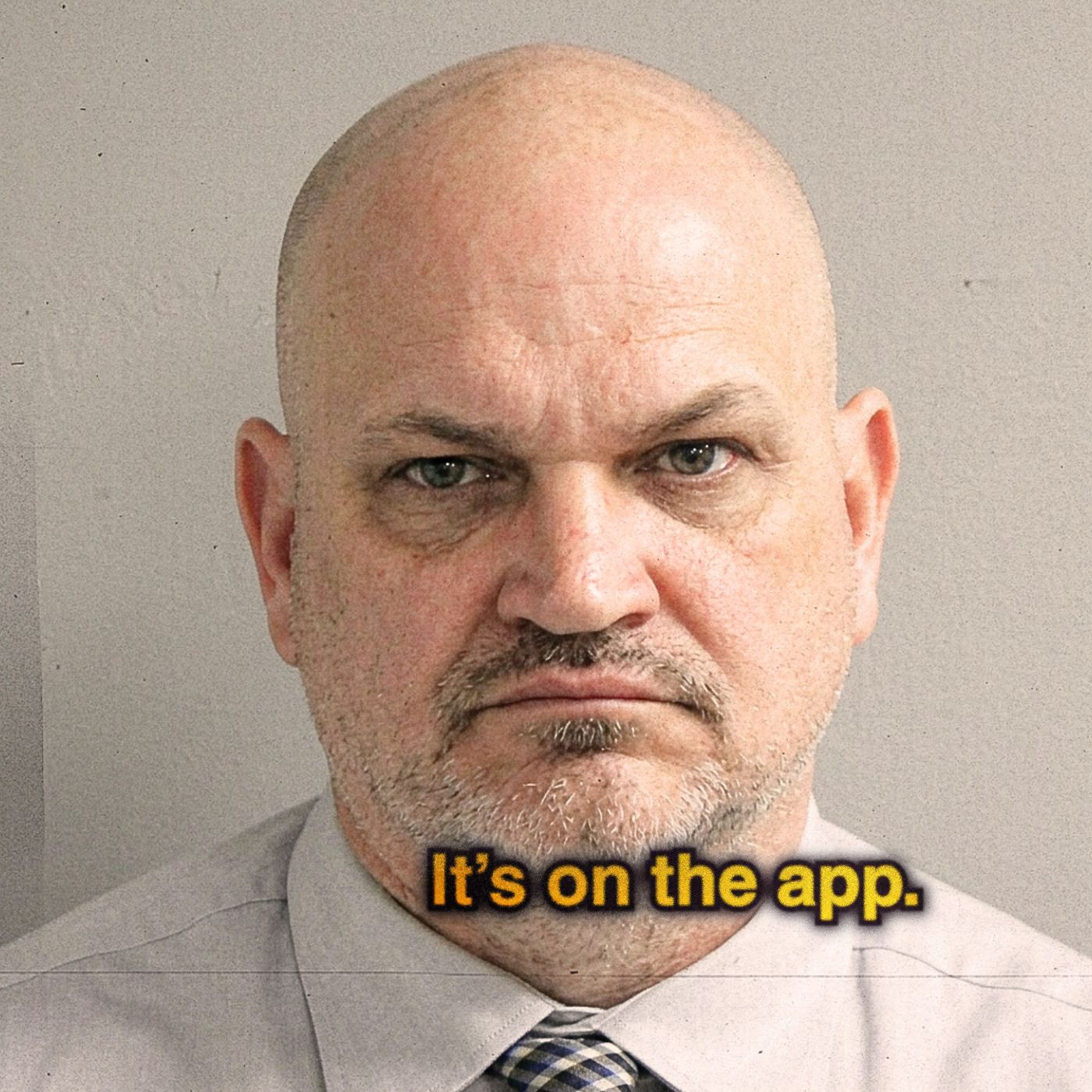
15:55 And then later says, I'm just asking for an opportunity to save myself. Because here, I mean, there's a potential to go to jail, right? Because I misused government funds. I won't get a pension. I'll go to jail. Assistant Chief says, I'm not the judge or jury. Jacobson responds, I know. I'm just saying it's not that I'm a bad person. I have a problem. I fixed my alcohol problem. I turned to gambling. I don't know why it just got worse recently. A.C. Zanelli tells Chief, I've never seen you gamble. Chief Jacobson responds, It's. On the app. $ 10, 000.
16:42 That's the number Carl confessed to. And the officers in front of him knew it was a lie the moment it left his lips. Remember two days earlier, a supervisor in management services had pulled the checks for Zanelli, two in November, in December, 5,000 apiece. The men sitting across from Carl knew the number was at least twice what he confessed to, but 20,000 wasn't the real number either. The state was about to put a forensic accountant on the case. We're not done counting. The next week went by in a flash. By the end of that day when the confrontation took place, Monday, January 5th, Carl was no longer chief of police. but he hadn't been fired.
17:30 You see, immediately after that meeting, Carl retired. The paperwork was sent in the same exact day, effective immediately, pension secured, at least for now. Carl filed for retirement before anyone had a chance to react. He never went back to that office. Cinelli reported it up the chain and had the locks changed. By Friday, Carl's lawyer called the state's attorney and to let them know his client was invoking the Fifth and would not be talking to police. So Carl didn't run. He didn't try to destroy any evidence as far as the record shows. What he did was faster and more efficient. He followed procedure. He exploited the system that he had been a part of for his whole career. Retirement filed, the Fifth invoked before an interview could even be scheduled again. Every move by the book.
18:31 27 years of knowing exactly how the machine processes a man in trouble. On January 23rd, state police seized the bank records and a forensic accountant from the FBI sat down with two stacks of paper. Carl Jacobson's personal checking account on one side, the narcotic enforcement program on the other. And they started to compare. 2025. 14 checks, $ 5, 000 each, $ 70, 000 total cashed. 23,000 of it shows up in expenditure reports, money that got where it was supposed to go, documented, accounted for. The other 47,000 isn't.
19:16 Then they went back a year to 2024, another 34,000 cashed, unaccounted for. $ 81, 500 out of the fund that pays people to talk to the police, plus the $ 4, 000 that was supposed to go to the kids. $ 85, 500. Gone. Carl admitted to $ 10, 000. Now the interesting thing is $ 14, 000 of it, they could follow the whole way out of the fund into the checking account. Carl admitted to 10. Now, the interesting thing is 14,000 of it, they could follow the whole way out of the fund into the checking account, out of the checking account into DraftKings and FanDuel, traced precisely.
19:56 Two of the informant checks turned up as photocopies when the state seized Carl's bank records, 5,000 each deposited into his personal account. Both of them cashed the same day they were written No gap, not even a night to sleep on it. There's a line from Werner in the affidavit. Carl cashed $ 5, 000 a month. He handed Werner usually two, never more. Werner told investigators he didn't know what happened to the rest. For six years, nobody knew what happened to the rest because there was nobody whose job it was to know except Carl Jacobson. But the kids' fund hurts more than the informant money. at least for me, and it seems like it lingered for Carl as well.
20:47 The Connecticut State Police Eastern District Major Crime Unit obtained a signed and sworn statement. From the executive director of the New Haven Police Activity League program, we glossed over it. So I just want to quickly describe what the PAL actually is. It's a youth program that directly connects law enforcement officers with children and teens, which you might call troubled youth programs. A free event they actually hold in New Haven. It's called Homework and Hangout, 5 to 7 p.m. on Tuesdays and Thursdays. You can drop your kid off. They'll be supervised. They can read books, play board games, or just do their homework. It's a real program with real tangible benefits for the community. On January 29th, 2026, at 1248 p.m., the executive director of the PAL announced received a call from an unfamiliar phone number. He returned that call, and when the person answered, they said, Hey, it's Carl. From the affidavit.
21:52 Jacobson stated that he was sorry for letting the police department down, letting him down, and letting the PAL down. Jacobson also said that he had heard that people were claiming he had taken money from PAL, and he wanted him to know this was not true. Jacobson explained that he had cashed two checks to support a woman's toy drive. But after the events at the police department, the woman wanted nothing to do with him or his money. Jacobson told the director that he deposited the funds back into the PAL account. The information that Jacobson told him is consistent with the $ 4, 000 cash deposit into the New Haven Police Activity League banking account on January 16th, 2026.
22:41 Could have been a simple slip of the tongue. I've never heard of a woman's toy drive. We've all heard of a children's toy drive. But I think we all know the most likely reason that Carl got his words mixed up. Because there was no toy drive. The sportsbooks cooperated. When Connecticut State Police came with warrants, DraftKings and FanDuel didn't flinch. They opened the file and handed over a year of Carl Jacobson's betting activity. Every wager, every deposit, every dollar to the cent. They knew precisely who Carl was.
23:22 He was one of their best customers. Back in episode one, I said the warrant showed Carl had a customer relations person assigned to him. That may have been incorrect. At least the warrant doesn't say that. Where I actually got that from is a man named Jonathan Cohen, who wrote a book about the American sports betting industry and who sat down with a New Haven reporter days after Carl Jacobson's arrest and read the same 10 pages that we've been reading through. He described how these companies work. They find the big fish. They put a line on them. And the reporter noted in the piece that Cohen was not talking about Carl specifically and He was saying that Carl's story fits a pattern. So here's what we actually know and can prove. I can tell you what this industry does to men who bet the way Carl Jacobson bets.
24:19 That is documented. And it's in job listings, earning reports, and regulatory filings. I cannot confirm that this was done specifically to Carl. At least not yet. We've talked about the gambling ads. They sell you a stadium where everybody's got 20 bucks on the game. Everybody's yelling at the screen. Everybody's having a night. That's the picture. Millions of people having a little fun and some of them winning big. That is not the business. Everyone in the stadium is losing. You know this from episode two. The price is baked into every line on the board and the math doesn't take a night off. Sure, you might win a bet or two in the short term. You might have a 10-day winning streak. But over the long haul, you will never come out ahead. The longer you bet, the more you wager, the more it is guaranteed you will lose money.
25:24 This is not like a game of battleship where each bet gets you closer to a hit. Nobody in the stadium is beating the machine in the The only question is how fast you lose and how much. And if you are one of those ones who is cursed with a big win early and you happen to have a genetic predisposition to betting addiction, then you might very well have hit the jackpot, but in a way you might not understand yet. The sportsbook PointsBet, in its own filing, showed that VIP customers were half of 1% of its users. 0.5% brought in more than 70% of revenue. Fill your stadium with 20,000 people, and the business is 100%. But let me say again very clearly, the other 19,900 are not winning anything. They're losing small, slowly, on schedule, by design.
26:26 Losing at a rate that feels like entertainment. They are the scenery, and the scenery is what keeps the 100% from feeling like what they really are. Marks. So there's a job, a real job, posted publicly. You can probably find listings for it tonight if you go online. VIP account manager at FanDuel. Salary, $ 60, 000 to $ 70, 000 a year. Job description, manage the portfolios of high-value clients, build relationships, encourage loyalty, keep a documented profile on them. host them at events. And down in the qualifications, it says you should be able to, quote, identify customer trigger points. Run that through any other addiction, a liquor company, hiring customer relations people who can manage a portfolio of alcoholics. Sounds a little bit like a bartender, but it's much more insidious than that. Because a bartender doesn't text you when you haven't shown up for a drink. In 2023, a man named Amit Patel pled guilty to stealing $ 22 million from the Jacksonville Jaguars NFL football team. He was their manager of financial planning, 31 years old. And the way he did it is going to sound familiar. The Jags had given him control of the team's virtual credit card.
27:55 One man, four years, and nobody over his shoulder. $ 22, 221, 000. $ 454. 40, $ 20 million of that went to FanDuel. Patel is serving six and a half years in federal prison, and in 2024, he sued FanDuel for $ 250 million. The lawsuit is where the following details come from. They're not facts, they're Patel's allegations. They have not been proven, and FanDuel has predictably declined to comment. Patel says FanDuel made him a VIP, says they gave him $ 1. 1 million in credits. He says they flew him to the Super Bowl, the Masters twice, the college football playoff championship, and Formula One in Miami. And he says he had a host, an actual person with a name, Brett Krause. Patel alleges that Krause contacted him as many as 100 times a day, starting early in the morning, running late into the night for two years.
29:07 On days Patel didn't gamble, he says Krause called him to ask him why. We don't really need to hear anything more than that, but the suit goes on. It also claims Krause acknowledged more than once that the two of them were breaking anti-money laundering rules, that they moved some of their texts onto Krause's personal phone so compliance wouldn't see them, and that he coached Patel on what to say when they were communicating on the company phone. But, as a renowned doctor once said, I don't care how flat you make a pancake, there's always two sides. Krause's attorney called Patel a convicted fraudster. She said he lied to Krause about his life and that Krause was a low-level employee at the time anyways. And she has a point.
29:58 Patel is a man who stole $ 22 million and is now trying to stack on top of that another $ 250 million. And Patel's case is markedly different than that of Carl Jacobson's. Prosecutors made a point at sentencing that not all of Patel's spending was the addiction. In fact, huge chunks of it were not. $ 78, 000 on private jets, $ 600, 000 at Apple. a condo, a Tiger Woods putter. So the detailed account of one of these jobs comes from a professional liar with a quarter of a billion dollar reason to tell it. Yet, the VIP host, the job, it exists. And its sole reason for existing is to extract as much money as possible from gambling addicts with large bankrolls. But they don't always have Large bankrolls. Which brings us to Chris Bruni.
31:04 Chris is 25 years old. He lives in Sheffield, England. An electrical engineer making 60,000 pounds a year, he opened an account with an online casino called Winner on Boxing Day in 2016. That's winner.co.uk. Two days after signing up, his VIP host, sent him a free Apple Watch. The flytrap wasted no time analyzing Bruni, and it liked what it saw. Three days after he opened that account, somebody inside the company wrote an internal email noting that Bruni was down 22,000 pounds. The regulator later found the company had no idea what Chris Bruni did for a living.
31:54 They had not even bothered to ask. Bruni was quickly upgraded to the exclusive VIP club, and he was assigned a personal account manager. Bruni's debit cards were declining at the time. Winner.co could see the card declining. According to a regulator's report after his suicide, they discovered that his account manager never had a single conversation about the declining cards, about if he could afford this little habit. about if he might be developing an addiction. That conversation never happened. In the five days before he died, Chris Bruni ran through 119,000 pounds in his winner.co account and lost it all.
32:43 In those same five days, the company gifted him over 4,500 pounds in cash bonuses. Chris died on the 5th of April, 2017. He left a note, which has never been made public, but the record says that it named gambling specifically. That 119,000 was five days of churn, deposits and losses cycling through, and the same money counted and recounted. When they closed his accounts and ran the real arithmetic, his actual net loss was right around 34,000 pounds, which is 46,000 US dollars.
33:25 half the man's yearly salary. Bad, but survivable. Britain's Gambling Commission investigated that company for 18 months and found serious systematic failings. In 2016 and 2017, they sent responsible gambling emails to about a quarter of 1% of their customers. The regulator called that figure exceptionally low. They wanted to find the company 3.5 million pounds, but they couldn't. The company handed back its license in the middle of the investigation and closed their doors permanently. But Great Britain did something with this information that no one in the U.S.
34:10 has had the brains, or more likely the guts, to do. October 2020. New rules. No VIP scheme can enroll anybody under 25. You cannot reward a customer for losing. A named senior executive has to personally sign off on these accounts. And you have to check whether the person can actually afford what they're betting. The number of high-value customers across British operators went from about 42,000 to 1,600. That's less than 4% of VIP accounts that survived. The United States has no such regulations. No federal rules about VIP hosts.
34:54 Now before we get into the next section, I want to tell you what broke the spell for me. Remember, I was winning. I was up about $ 4, 000 or $ 5, 000 in a week. Real net bankable money. But the following information is what got me to close all my accounts permanently. These sportsbooks are extraordinary at spotting a pattern. If you start winning, If your betting shows the signature of somebody who actually knows what they're doing, they find you and they shut you down. Not banned, exactly, but limited. Your maximum bet drops to $ 5, maybe $ 20. You're still a customer, but you can't hurt them. Fanatics disclose that almost half the customers it had limited were actually losing money at the time it limited them. They don't always cut winners. Sometimes, Many times, early winners are their most profitable long-term customers.
35:55 They cut off people whose pattern looks like they might win later. This is the machine. There's no door out of it marked winner. Lose small, you're scenery. Start winning, you're limited. Lose big, you're the business. 1,366 deposits. Nobody limited that. because that's the machine working exactly as it was designed. The state asked FanDuel and DraftKings what Carl Jacobson bet, and the companies answered to the penny across a full year. Nobody asked them who talked to Carl.
36:37 There's no line in those 10 pages about a VIP host, a text at 11 p.m. at night after a day of account inactivity, But just because it's not in those 10 pages doesn't mean it doesn't exist. There was one place in time, one moment where these types of questions were going to get answered out loud on the record. Patel's lawsuit. Discovery would have opened the internal messages, the compliance conversations, what the hosts are told to do, what they actually do. In May of this year, a federal judge sent that case online. private arbitration. So the answers are out there. Maybe not in the Patel case, but it's only a matter of time before we start getting details.
37:25 In the meantime, I can tell you about mine. 10 days, 9 sportsbooks, and the offers came all day long. I don't think I had quite stuck around long enough to get a VIP host. I also probably hadn't lost enough money yet. But, I got boosts, second chances, a little something after a loss, 10 days in and I was worth chasing. But not for every sports book. Five or six of them didn't like how I was betting. Those early measured bets where I was finding an edge, taking both sides, playing promos off each other. A lot of those books didn't like what they saw. They didn't limit me yet, but I limited myself. Because they stopped sending promos and I stopped betting on those apps. FanDuel and Fanatics, those were the two that kept the promos coming. Almost twice a day, maybe more from each of them, I would get an email or notification of a profit boost, odds boost, or free bet. I went looking for those emails specifically for this episode, but they're gone. When I stopped betting and self-excluded from all the sportsbooks, I deleted all the emails, blocked all the addresses. So the only evidence I have that a machine was working on me is that I remember it working on me. Now, the
38:55 other side of the pancake. Nobody at those companies made Carl Jacobson write a check to himself. The offers are what they say they are. And there are people, non-addicts, who occasionally take it use it, and walk away. The person sitting in that VIP manager gig has a sales target, a family of their own, and if you ask them, they tell you, honestly, that they work in customer relations. Because they do. They are extremely good at customer relations. And that's the problem. If you've never held a secret like this one, it's easy to miss what's really for sale.
39:35 A man betting money he cannot afford is an unknown man. Others don't know him. He doesn't know himself. You edit every conversation. You quietly mute the phone at family dinners. The people who love you get a version of you, but not the whole you. Which means the person from the sports book, the one who has the real numbers in front of them, is the only person who knows the truth of your life, what it's become. And they're not upset about it. Everyone who loves you would be horrified. But this voice isn't. No flinch, no lecture, no tears at the kitchen table. Approval from the only one who knows.
40:20 For a person carrying a secret that heavy, that's a drug all by itself. Three assistant chiefs worked down the hall from Carl Jacobson for years, and though they, at times, suspected something was wrong, they didn't know what it was. His command staff didn't know. Whoever he came home to at night didn't know. But a server in Boston knew the hour, knew the amount, knew when it got worse. knew and had no reason on earth to do anything about it except exploit it for maximum profit. The reason any of this was legal in the first place, Connecticut gets a cut. That's the deal. The state legalized these apps in 2021, and in exchange, it taxes what they make.
41:11 Every screen Carl Jacobson tapped had a sliver of state revenue riding on it Jonathan Cohen, the guy who wrote the book on sports betting, did the arithmetic on that cut. On a whole, Connecticut takes $ 26. 5 billion in tax revenue yearly. Now let's go to 2023, the first full year of legalized online gambling in the state. Connecticut's cut was $ 273 million. Not a small number by any means, but in terms of total revenue that the state took in, That's almost exactly 1%. Cohen's words, a drop in the bucket. But the number is growing. In 2024, state revenue jumped from 273 to 400. And the following year, 528 million. Carl is not alone. Connecticut is recruiting hundreds, thousands of people just like him. Carl. So that's the deal. The machine operates legally in Connecticut and many other states just like it because it contributes one, maybe two percent of the annual tax revenue. And to the machine, Carl Jacobson's year, the $ 214, 000 he lost is a rounding error inside the drop.
42:39 After the Randy Cox thing, Carl Jacobson built the reforms you heard about last episode He made sure it was put down in writing. In a policy, if a person in your custody tells you they're hurt, you have to ask them about it. You have to call for help if they request it. Codified in Special Order 22-03, quote. Requiring all officers to make an initial inquiry to determine whether a prisoner is injured and or needs medical assistance. If a prisoner is injured or requests medical attention prior to transport, the officers must immediately contact their supervisor and request that an EMS be dispatched to their current location.
43:25 Carl made that law, and then he went home to a tiny screen. On day 11, I called somebody. You already know that. Carl Jacobson was who people called. He said he fixed the drinking. And I believe him. The wall held. The water went around it. In March, Carl stood in front of a judge and agreed to the conditions of his release. Show up, don't leave the state, and no gambling, online or in person. Somebody finally told Carl Jacobson to stop. It took a felony charge, an FBI accountant, and $ 85, 500 that wasn't his. In April, he pleaded not guilty and asked for a jury outside the courthouse for the first time since his arrest. He apologized to the mayor, to the city, to his officers. A reporter asked him how he could plead not guilty to something that he was apologizing for. And, well, here's what he had to say.
44:30 Officers, that's my biggest concern. You know, I. I just hope that the community and the officers can move forward and, you know, still do what they were doing together when I was chief. And, you know, I wish everybody luck. And I hope that, you know, I care about the officers. And then obviously with my situation, there was things that I didn't take care of personally. And I was, as chief, trying to get more services for the officers. And I just hope that if anything is learned from this that these officers need, um, it's a hard career and they need help and we got to keep, take care of them as we move forward.
45:15 What do you have to say to the city? What do you have to say to the mayor who had faith in you? Yeah, you know, um, I apologize to the mayor and the city and the officers. But Carl, can you explain in the arrest warrant, there is some admission there, but you plead not guilty today. Can you explain that? It's just part of the court process. I mean, um, You know, at this point, it's early in the stage, and, you know, basically, I don't want to comment further on that. That's more of my lawyer's part. Anything else you'd like to say to the viewers of Connecticut, obviously the people in the city who believed in you and trusted you? Yeah, no, I, you know, I apologize. I love this city. I hope this city moves forward. I hope the officers move forward. And that's all.
45:58 Thank you. I mean this with respect. Is there anything you can say about, like, you know, trying to tell people why you did. What you did? I really can't get into that now. I mean, it wasn't intentional. It wasn't something that I really can't get into it now. Gambling these days is such a serious thing and is affecting a lot of people. I mean, can you shed some light into just how serious of an issue it is? Well, yeah. I mean, it's something that obviously has been popping up all over the news, and it was something that I got caught up in. with the ease of having it on an app. So, you know, I just hope people understand, if anything, learn from the cases that are coming up recently to make sure they take care of themselves.
46:45 Is that something you are looking to get help for or seek some help for in Connecticut? I know there are some resources in the state. Oh, yeah. Yeah, I don't want to comment further on that either, but thank you guys. Thank you. Thank you. The affidavit is 10 pages long. I want to tell you how it ends. Not with a four and a half million. Not with the memo line. The last thing Lieutenant Wardell wrote is that because of Carl Jacobson's pattern of behavior, additional search warrants have been drafted, signed, and executed with expanded time parameters covering the years prior to 2024.
47:29 Carl had control of that fund, that money, since July of 2019. He appeared in a New Haven courtroom just a few weeks ago, August 4th. He was issued a continuance September 14th. Next time, the final episode of The App on the Phone. Thank you for listening. My name is TZ. and I'm the host of Tapes from the Dark Side. If any of tonight hits home, if you're struggling, please consider reaching out to the National Problem Gambling Helpline, 1-800-GAMBLER.
48:13 It's free, 24 hours. I want to get this episode out to you as quickly as possible, so no more credits. Do the credits in the finale. Thank you for listening. Until next time, try to enjoy the daylight. We've won a couple for about that amount. A couple for $ 600. Yes. So it more than paid for itself. Yes. I assume. Yes. That's why you keep playing. Lucky people. We've lost a few too. We've lost a few too. Oh, I can imagine. People usually only talk about their wins. Absolutely.


